
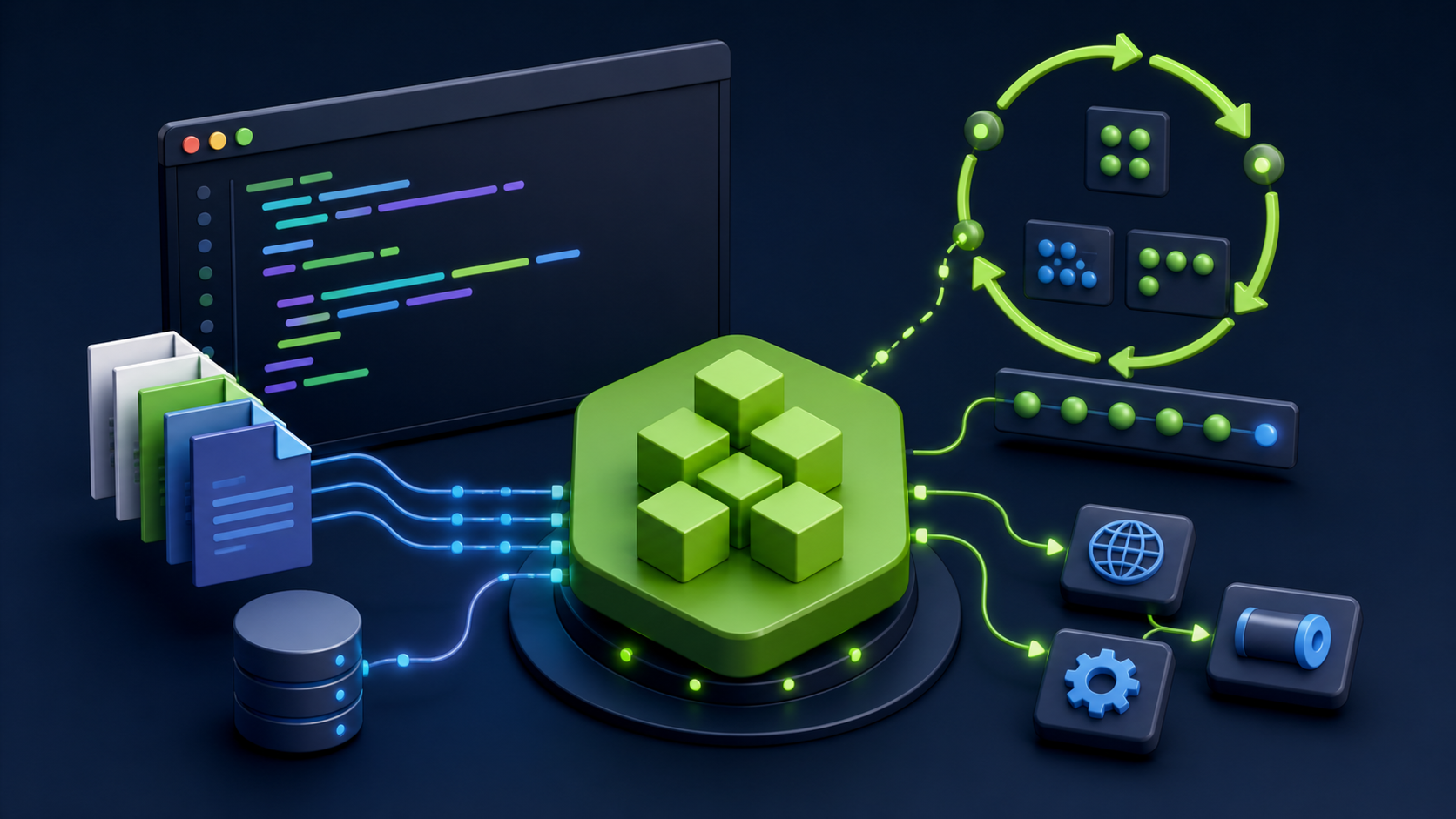
Use asynchronous APIs without blocking the event loop, understand microtask and timer ordering, run independent work concurrently, and propagate failures with async/await.
What you will build
This tutorial produces a working, verifiable result rather than a command list. Read each command before running it, keep configuration in version control without secrets, and record the versions used for repeatable deployment.
1. Prepare the project
mkdir event-loop-lab && cd event-loop-lab
npm init -y
Run preparation commands as an unprivileged application user unless a command explicitly requires sudo. A clean working tree and lockfile make rollback much easier.
2. Implement the solution
import { readFile } from 'node:fs/promises';
console.log('start');
setTimeout(() => console.log('timer'), 0);
queueMicrotask(() => console.log('microtask'));
const [hosts, hostname] = await Promise.all([
  readFile('/etc/hosts', 'utf8'),
  readFile('/etc/hostname', 'utf8')
]);
console.log({ hostsBytes: hosts.length, hostname: hostname.trim() });
Save the example in the filename indicated by its comment or surrounding instructions. Treat it as a minimal baseline: production applications should separate transport, business logic, persistence, and configuration into testable modules.
3. Verify end to end
node event-loop.js
node --trace-uncaught event-loop.js
Verification should cover both process state and a real request or data operation. A process that is merely running is not necessarily ready to serve traffic.
4. Troubleshooting and production notes
Synchronous filesystem, crypto, compression, or child-process calls block every request in that process. Promise.all fails fast; use Promise.allSettled when partial results are acceptable. Always await or return promises so rejections reach the request boundary.
Production checklist
- The supported Node.js LTS version and dependency lockfile are recorded.
- Configuration is validated at startup and secrets are stored outside source control.
- Input limits, authentication, authorization, timeouts, and error boundaries are explicit.
- Logs identify a request without exposing credentials or personal data.
- Health checks, graceful termination, resource limits, backup, and rollback have been tested.
Reference: official topic documentation. For production version selection, use a supported LTS line from the Node.js release schedule.