

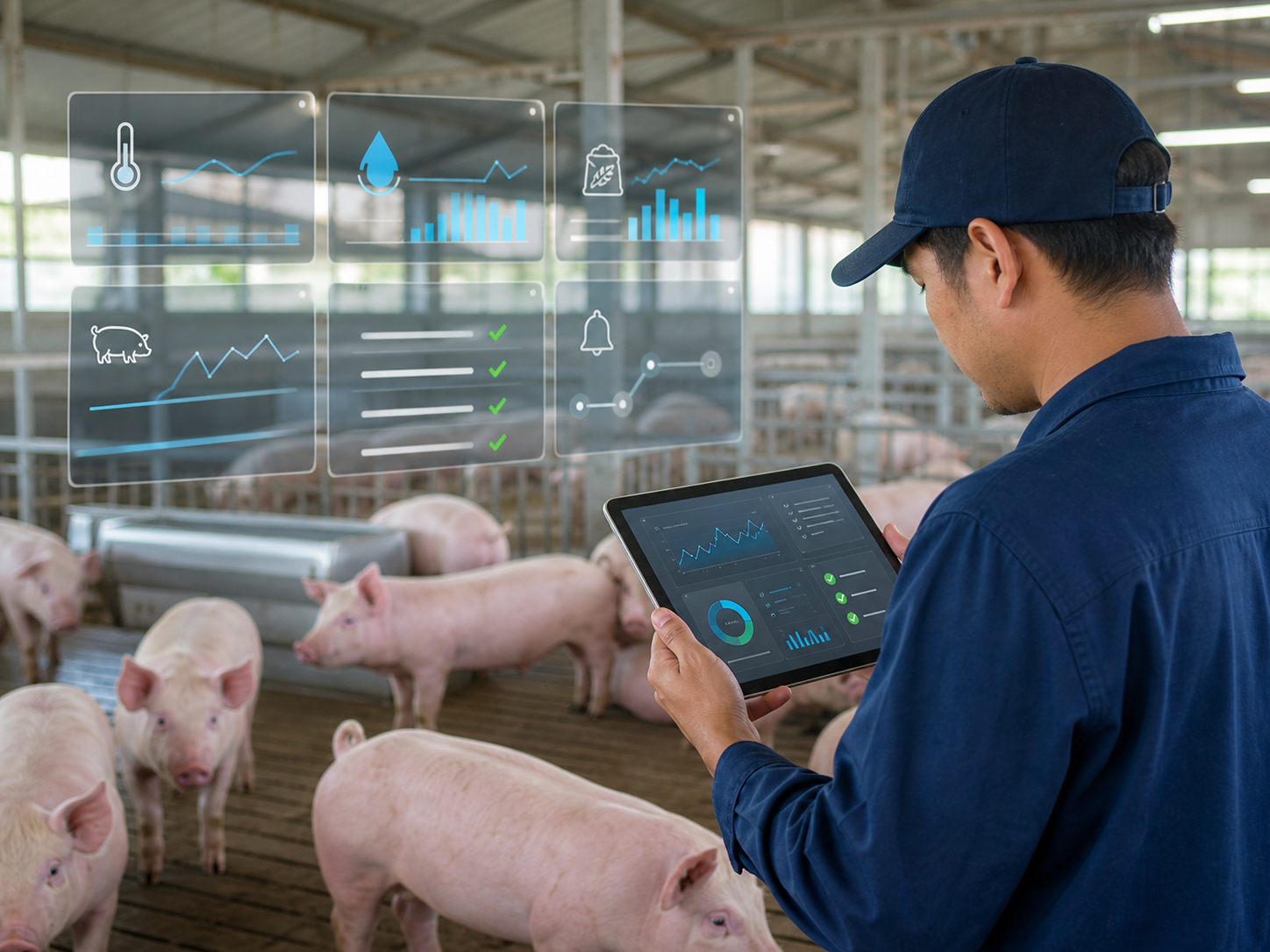
Remote Pig Health Support & Herd Monitoring
Structured remote support for pig health observations, herd trends, video walkthroughs, monitoring records, triage, biosecurity, and coordination with licensed local veterinarians.
- Estimated Delivery : Up to 4 business days
- Free Shipping & Returns : On all orders over $200
Remote Support for Pig Health, Herd Observation, and Farm Decisions
LAPVN provides structured remote pig health support for farmers who need help organizing observations, reviewing herd trends, preparing information for a veterinarian, and improving routine monitoring. The service uses calls, messages, photographs, video, records, and farm data to help identify priorities and determine appropriate next steps.
Remote support is most useful when it strengthens daily observation and connects the farm with timely local veterinary care. It cannot reproduce a physical examination, laboratory test, necropsy, on-site environmental measurement, or direct inspection of feed and water.
What remote support can cover
- Structured review of appetite, water use, behavior, coughing, manure, skin, locomotion, body condition, and mortality records
- Analysis of group-level trends by barn, room, age, source, or production stage
- Remote walkthroughs using live video or recorded clips
- Daily or weekly health and production checklists
- Review of temperature, humidity, ventilation observations, feed intake, water intake, weight, treatment, and event logs
- Preparation of a concise case summary for the farm’s licensed veterinarian
- Follow-up tracking after an on-site veterinary plan has been established
- Biosecurity, isolation, observation, recordkeeping, and escalation workflows
Suitable use cases
- Routine herd-monitoring support and scheduled farm reviews
- Early discussion of a non-emergency change in intake, growth, behavior, manure, or respiratory signs
- Review of recurring management patterns across batches
- Helping staff collect clearer photographs, videos, histories, and records
- Checking whether agreed farm procedures and monitoring steps are being followed
- Coordinating information between farm staff, nutrition support, equipment providers, and the attending veterinarian
How a remote session works
- Intake: provide location, herd size, affected groups, timeline, recent animal movements, feed and water changes, vaccination history, treatments, mortality, and available records.
- Evidence collection: submit clear videos, photographs, environmental readings, feed and water observations, and group-level data without compromising farm biosecurity.
- Triage: identify whether the situation appears suitable for continued remote support or requires prompt on-site veterinary examination, sampling, or emergency action.
- Action checklist: document observations to repeat, animals or groups to separate, records to preserve, questions for the veterinarian, and safe non-prescriptive management checks.
- Follow-up: compare trends and confirm whether escalation or an on-site visit is needed.
Information that improves a remote review
- Accurate number, age, weight stage, source, and location of pigs
- Number affected, first observed date, progression, and mortality
- Feed batch, recent diet changes, approximate feed intake, and feeder condition
- Water source, flow, recent changes, and consumption records where available
- Barn temperature, humidity, ventilation status, stocking, and recent weather
- Vaccination, medication, movement, visitor, and cleaning records
- Wide barn video plus close, stable footage of representative animals
- Laboratory, necropsy, or veterinary findings already obtained
Health monitoring plan
For ongoing support, we can help establish a consistent monitoring routine using practical indicators such as daily mortality, removals, feed and water consumption, weight or average daily gain, coughing observations, manure changes, treatment events, farrowing outcomes, environmental readings, and staff notes. Thresholds should be agreed with the attending veterinarian and adapted to the farm’s baseline rather than copied blindly from another operation.
Biosecurity and outbreak readiness
Remote review can help organize entry records, animal movements, isolation steps, cleaning workflows, equipment separation, visitor controls, and communication during a suspected problem. The FAO provides official resources on pig-sector biosecurity, but local disease-reporting rules and veterinary directions take priority.
Emergency and mandatory escalation
Do not wait for a remote appointment when pigs show severe breathing difficulty, collapse, uncontrolled bleeding, major trauma, poisoning, rapidly increasing deaths, widespread sudden illness, severe neurologic signs, inability to access water, dangerous heat stress, or any condition requiring immediate intervention. Contact a local licensed veterinarian or the relevant emergency and animal-health authority immediately.
Suspected legally reportable or transboundary disease must be handled under local law and official veterinary instructions. Do not move animals, carcasses, equipment, or potentially contaminated material unless directed by the appropriate authority.
Veterinary relationship and prescribing
Diagnosis, treatment, prescription, vaccination, withdrawal periods, laboratory sampling, and medical decisions must be handled by a veterinarian legally authorized for the farm’s jurisdiction and within the required veterinarian-client-patient relationship. AVMA materials describe that relationship as the foundation for clinical judgments and treatment and require sufficient veterinarian knowledge of the animals and their care; see the AVMA veterinary guidance.
LAPVN remote support is not a substitute for a licensed veterinarian, physical examination, laboratory testing, or emergency service. We do not promise a diagnosis from photographs or video and do not independently prescribe veterinary medicines through this listing.
Possible deliverables
- Remote intake and herd-observation summary
- Prioritized questions and evidence list for the attending veterinarian
- Daily or weekly monitoring template
- Escalation thresholds and communication workflow
- Biosecurity and isolation checklist for review with local professionals
- Trend review and scheduled follow-up notes
- Recommendations for records, sensors, cameras, or simple data collection
Requesting a quotation
Tell us the farm location, herd size, production stages, preferred language and communication method, whether support is one-time or ongoing, the type of monitoring needed, and the contact details of the attending veterinarian when coordination is requested. Scope, availability, response window, deliverables, professional boundaries, and pricing will be confirmed before service begins.


Reviews
There are no reviews yet.